Decorating a Cotswolds Cottage: Balancing Rustic Charm with Modern Comforts
A Cotswold cottage is rarely a blank canvas. The walls lean, the floors dip, the beams sit lower than anyone over five foot ten would like, and somewhere behind the plaster there is usually a blocked-up fireplace. That is the charm, and it is also the puzzle. The aim is to keep the character that drew you to the place while making it genuinely comfortable to live in through a wet January.
Done well, this is not a battle between old and new. It is a run of small, deliberate decisions about materials, colour and warmth that look effortless once they are finished.
Start With the Building, Not the Mood Board
Before you choose a paint colour, live in the house for a few weeks and watch it. Note where the sun lands in the morning, which rooms never quite warm up, where damp patches appear after heavy rain, and which doors stick in winter. Old cottages are good at telling you what they need, though rarely politely.
Solid stone walls need to breathe. Traditional buildings were finished in lime mortar and lime plaster, both of which let moisture move through the fabric and evaporate. Cement render and gypsum plaster trap that moisture instead, so it travels inward and shows up as blown paint, black mould in cold corners and a musty smell that no scented candle will disguise.
So if you are replastering or repointing, use lime and let the wall do its job. If the cottage is listed or sits in a conservation area, check with your local planning authority before changing anything external, including windows, render and roof coverings. Where structural work, damp treatment or chimney alterations are involved, a surveyor or conservation-accredited professional is worth the fee.
Use Local Materials Properly
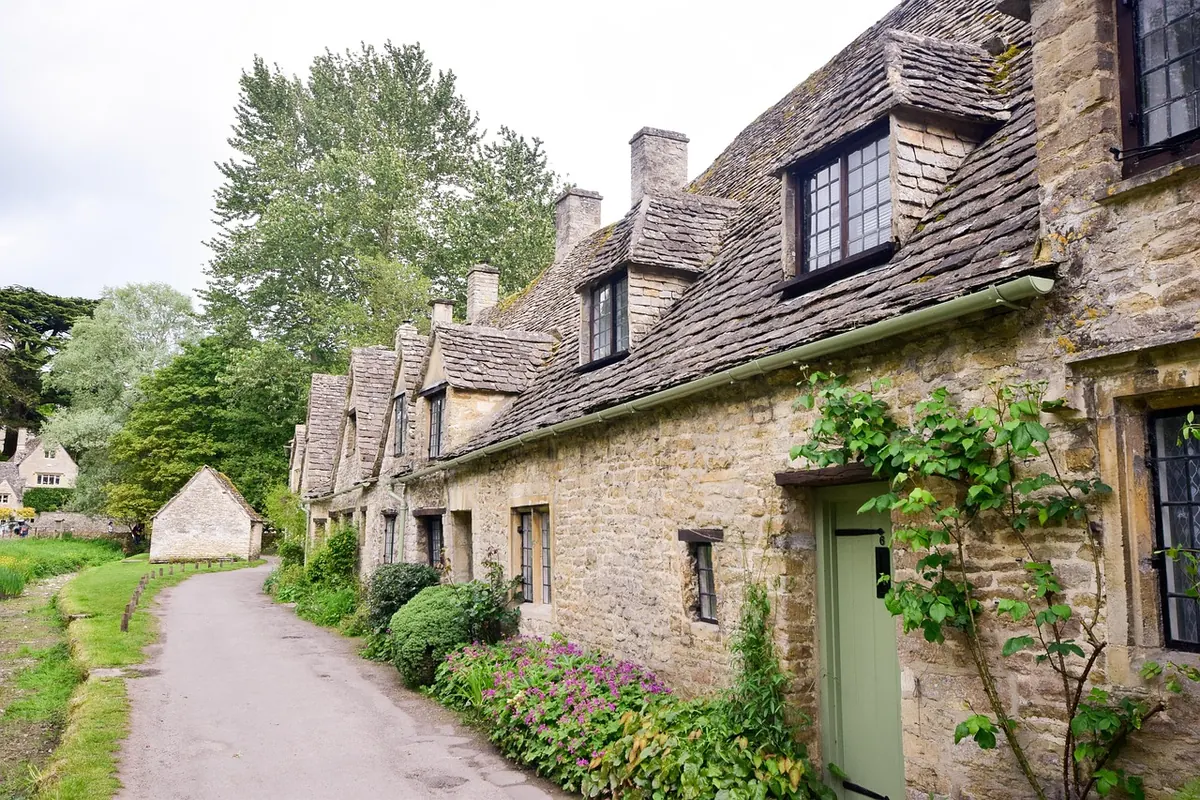
Cotswold stone is the obvious starting point, and the reason it works is that it came out of the ground under the house. The colour shifts across the region, from pale cream to deep honey, so stone quarried twenty miles away can look subtly wrong beside its neighbours. For repairs and extensions, source reclaimed or locally quarried stone and let the mortar be a soft lime mix rather than a hard grey line.
Inside, the same logic applies. Reclaimed flagstones for a hall, old pine floorboards for a bedroom, oak beams that were already old when they were first used. Mix in plain, well-made modern pieces so the room does not tip into pastiche. One honest material used generously always reads better than five rustic ones competing.
A Colour Palette Drawn From the Landscape
Look out of the window rather than at a trend report. The colours around a Cotswold cottage are muted and slightly dusty: limewash whites, soft chalky greens, clay pinks, warm ochres and the grey-brown of weathered stone.
Chalky emulsions and limewash suit these rooms because they absorb light instead of bouncing it about. Keep to three or four colours across the house so the rooms feel related. In a small, dim space, painting walls, woodwork and ceiling in the same shade tends to feel calmer and more generous than a white ceiling with contrasting trim. Save deeper colours for rooms you use in the evening, and always test a patch on the wall before committing.
Modern Comforts, Handled Carefully
Nobody wants a beautiful cottage that is cold and damp. The trick is to add comfort without sealing the building up or stripping out what makes it special.
- Draught-proofing first. Chimney balloons, brush seals on doors and discreet secondary glazing solve a surprising amount of discomfort for very little disruption. Keep some ventilation, though; old buildings need airflow.
- Insulation that breathes. Sheep's wool, wood fibre and hemp boards work with solid walls rather than against them. Avoid sealing the inside face of a stone wall with impermeable materials.
- Windows. Repair and draught-proof original windows where you can, then add secondary glazing. Replacement is costly, usually needs consent, and rarely improves the look of the house.
- Heating. Radiators work best set under windows and sized generously. Underfloor heating is lovely in a new extension but can be tricky beneath historic floors, so take advice before lifting flagstones.
- Wood burners. Check whether you are in a smoke control area, choose an approved appliance and have a registered installer line and fit the flue.
- Ventilation. Extractor fans in the kitchen and bathroom, plus the occasional open window, prevent the condensation behind most damp problems.
Furnishing Small Rooms Without Cluttering Them
Cottage rooms are often small, dark and awkwardly shaped, and heavy furniture makes them feel tighter. Measure doorways and turns before you buy anything; a sofa that will not go round the corner is an expensive mistake.
Choose low-slung seating, slim console tables and pieces that do two jobs, such as a bench with storage beneath. Leave one wall relatively empty so the eye has somewhere to rest. Layer texture rather than pattern: wool throws, linen cushions, a woven rug on stone, a well-worn wooden bowl.
Light in Layers
Recessed downlights and old beams are a poor combination, and a single overhead bulb flattens a room. Use several softer sources instead: wall lights, a table lamp on a sideboard, a floor lamp beside a chair, a picture light over something you love. Warm bulbs, dimmable where possible, and switches placed where you actually walk all make a difference.
Kitchens and Bathrooms
These two rooms carry most of the practical strain, so be firm about what you need. In a kitchen, freestanding or painted timber units, a deep sink, stone or timber worktops and open shelving suit a cottage far better than a wall of glossy cabinets. A walk-in pantry or a tall cupboard is often the most useful thing you can add.
In a bathroom, keep the shell simple: tongue-and-groove panelling, a neutral tile, a traditional radiator and a good extractor fan. If the ceiling is low or the floor slopes, a freestanding bath may not be sensible. A well-fitted shower over a tray can look just as considered and will be easier to live with every morning.
A Sensible Order of Work
Decorating goes last, not first. Deal with damp, drainage, ventilation and roof repairs before anything cosmetic, because paint over a problem is money wasted. Then sort heating and insulation, then electrics and lighting, then plaster and paint, and only then curtains, rugs and furniture.
Work room by room, finish one space properly rather than starting four, and keep a running list of what the building tells you. A Cotswold cottage rewards patience. Get the materials and the warmth right, and the charm takes care of itself.
Photo: idunlop / Pixabay

DIY Christmas Table Centrepiece Ideas Using Foraged Greenery
Gather ivy, holly, conifer and moss on a winter walk, then turn them into a low candle ring, a leafy...

A Checklist for Buying Second-Hand Furniture Online in the UK
What to measure, ask and inspect before buying pre-loved furniture online — plus the red flags that mean...
About Us